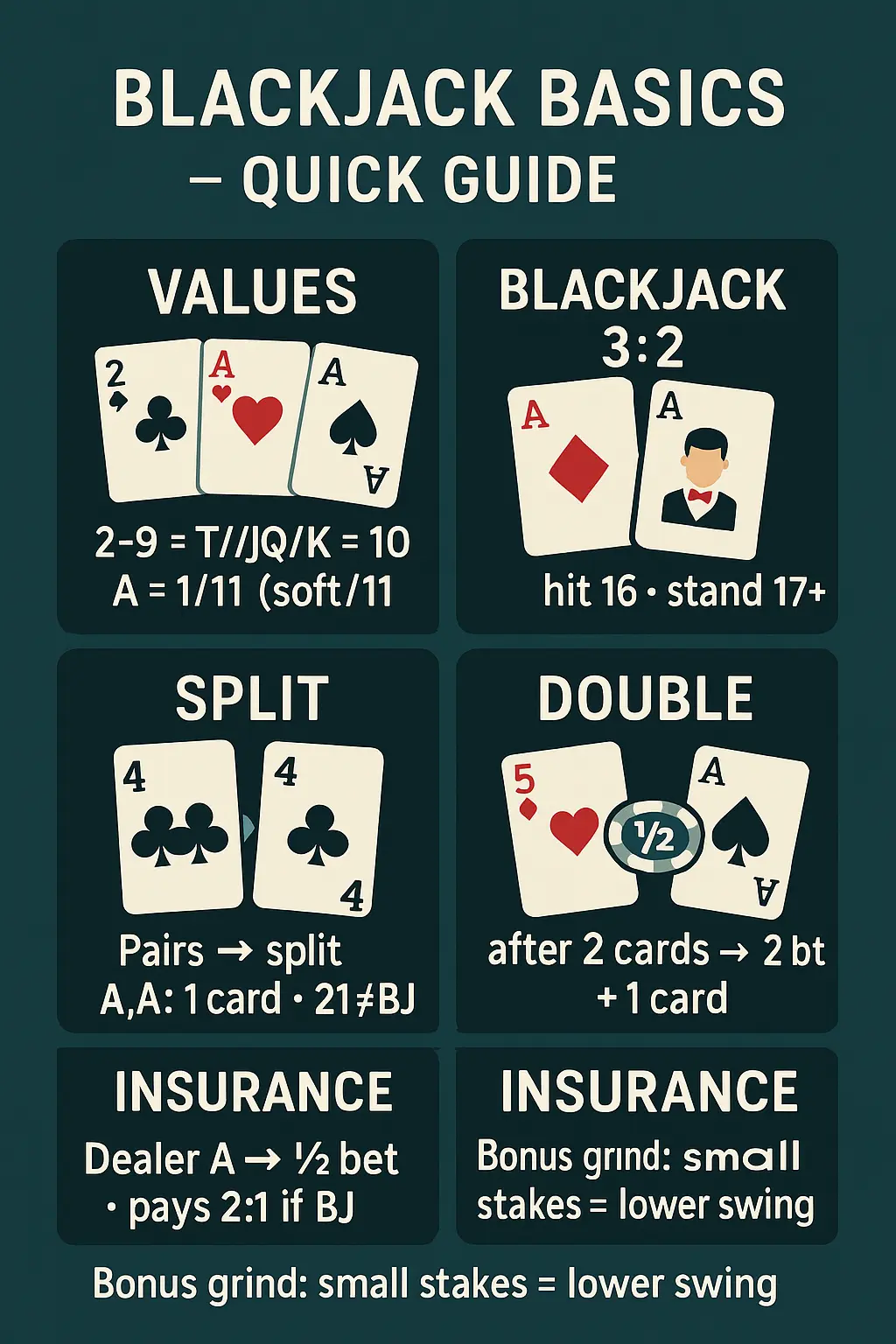
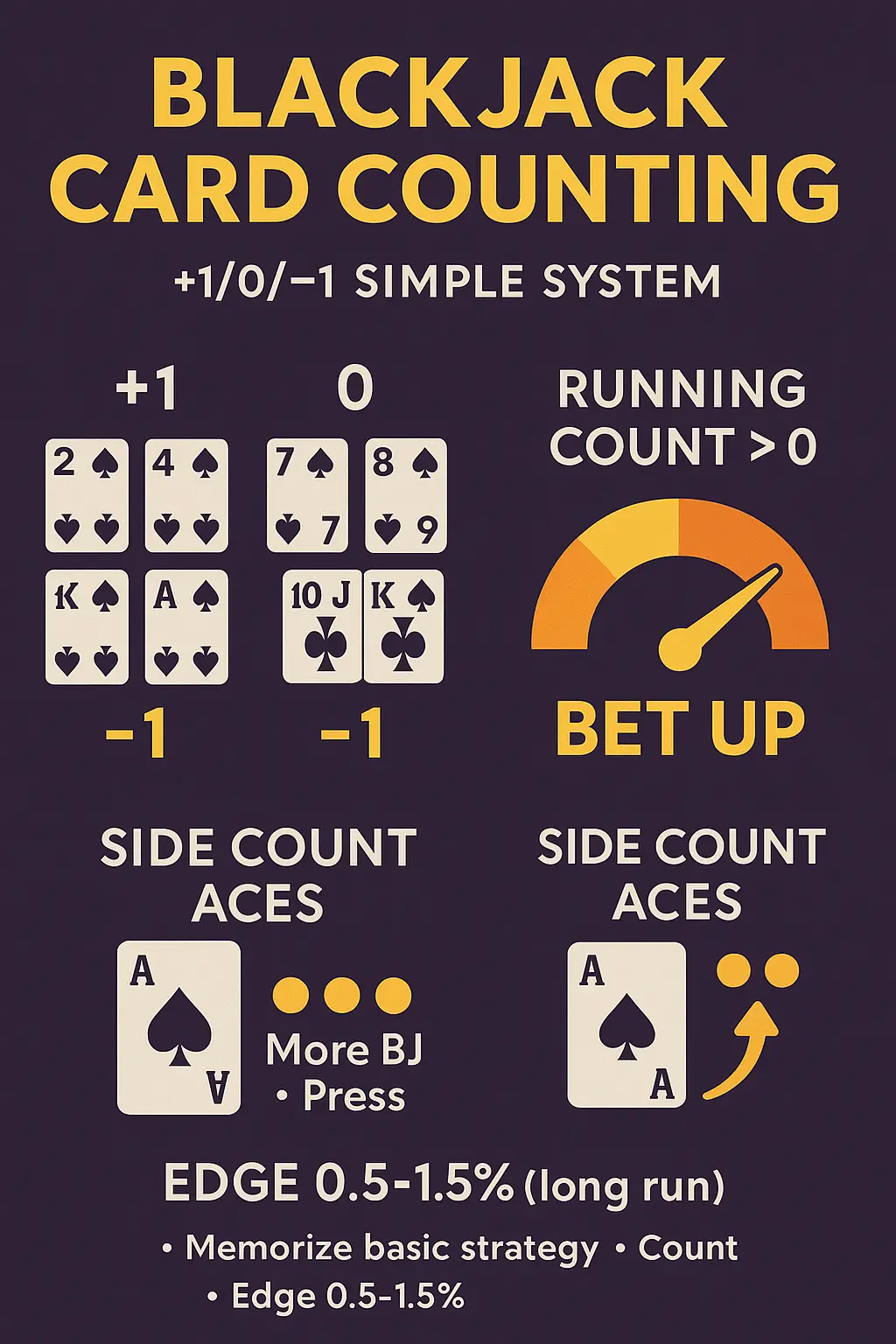
Card counting uses the information revealed before the shuffle—the cards already dealt—to spot favorable betting windows. Over the long run, a skilled counter can gain about 0.5%–1.5% over the house. The short-term edge is modest, so success requires speed and a memorized basic-strategy chart.
The count
Use this streamlined system:
-
2, 3, 4, 5, 6 → +1
-
7, 8, 9 → 0
-
10, J, Q, K, A → −1
Add or subtract one for every exposed card to keep a running count.
How to use it
-
When the running count is positive, more small cards have already left the shoe, so the remaining pack is richer in tens and aces—that’s good for the player. Increase your bet in these spots.
-
When the count isn’t favorable, bet small. The idea is to win more when ahead and lose less when behind, allowing the long-term math to work in your favor.
Track aces separately
Although 10, J, Q, K, and A all count −1 in this system, keep a separate side count of Aces. A surplus of undealt Aces raises the chance of blackjacks, so you should press your bets when many Aces remain. Likewise, when you hold an Ace, pairing it with a 10-value card becomes especially valuable.